Fifth Annual Symposium "Rebuilding a Place to Call Home 2026: Resilient Cities & Regenerative Neighbourhoods"
Over two days of the event, Ukrainian and international researchers, public officials, architects, urban planners, and other experts will share knowledge, present practical case studies, and discuss new approaches to recovery planning and implementation, contributing to the advancement of policies and practices for more resilient and just Ukrainian cities. The symposium is co-organised by Kharkiv School of Architecture, Ro3kvit Urban Coalition for Ukraine, Ukrainian Catholic University, GIZ projects EU4ClimateResilience and JGURA.
Ukraine Energy and Climate Policies: Security and Resilience, EU Integration, Research
Join the annual conference of Green Deal Ukraina, bringing together Ukrainian and international policymakers, researchers, industry representatives, and civil society experts to discuss the future of Ukraine's energy and climate transition. The conference will provide a platform to exchange perspectives on strengthening the resilience and security of Ukraine's energy system, advancing European integration, and supporting evidence-based policymaking through research and innovation.
Impact of Public Administration Reform Coordination on Ukraine–EU Talks
The event will focus on the presentation of the findings of a study by Ukrainian Centre for European Policy (UCEP) and the Centre of Policy and Legal Reform on public administration reform coordination models. The study identifies the absence of a clearly designated owner of this policy, explains why the existing coordination mechanism does not work, and proposes three models, providing a rationale for the preferred option. The purpose of the discussion is to gather views and proposals from the institutions responsible for coordinating the reform so that the study’s recommendations can be taken into account in future decision-making.
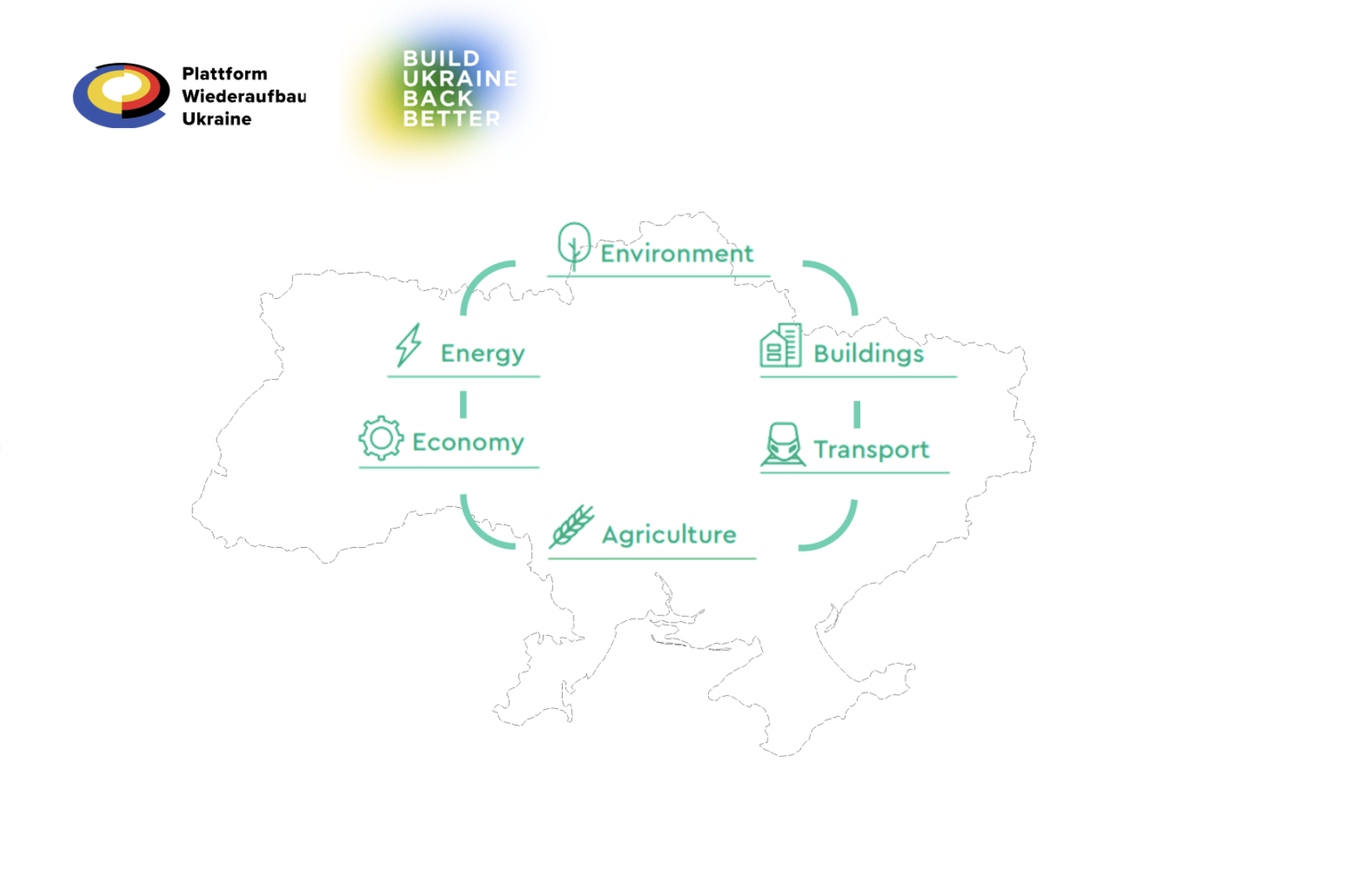
Rethinking Reconstruction: Sustainable Buildings in Ukraine
Join us for a discussion on how Ukraine can rebuild and modernise its housing stock and public buildings while responding to the challenges of war and laying the foundations for long-term sustainability. Drawing on lessons from implemented projects, the event will examine the trade-offs between cost, resilience, and sustainability, as well as the reforms, investments, partnerships, and financing mechanisms needed to advance a low-carbon construction sector and achieve nearly zero-energy and zero-emission buildings.
Attracting and Retaining Talent in Ukraine’s Ministry of Energy: Turning Brain Drain into an EU Accession Asset
Join the webinar on governance in Ukraine’s energy sector, organised jointly by Green Deal Ukraina, International Energy Agency, Ukraine Facility Platform, Kyiv Energy and Climate Lab, and Deutsch-Ukrainisches Büro. This webinar focuses on how the Ministry of Energy can attract and retain the talent needed to support Ukraine’s EU accession. It will bring together Ukrainian and international stakeholders to discuss the challenges the Ministry is facing and possible approaches to strengthening its institutional capacity.
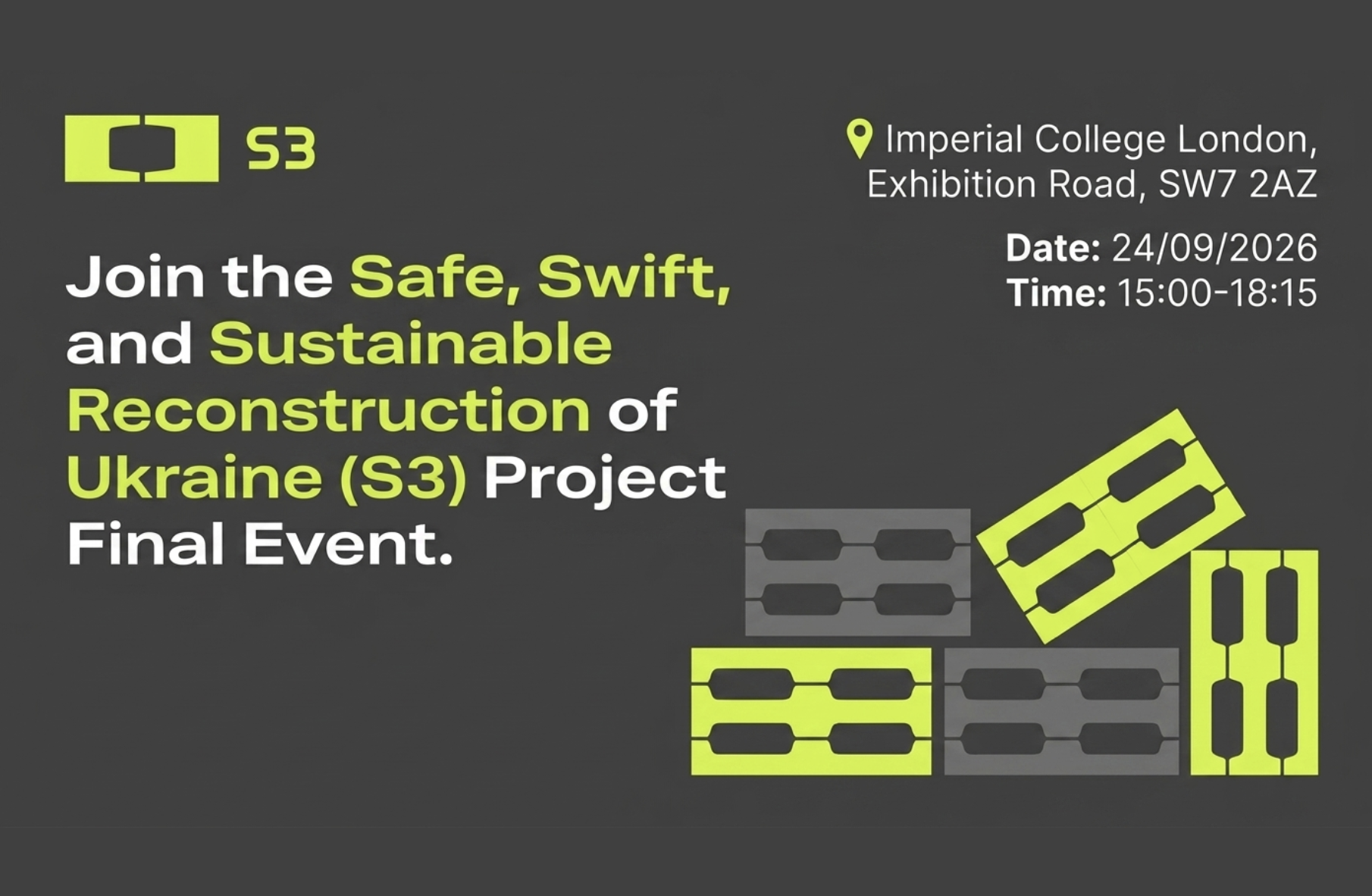
Safe, Swift, and Sustainable Reconstruction of Ukraine Project Final Event
The S3 project brings together academic partners in the UK and Ukraine, industry partners, and practitioners working on the ground to advance knowledge, strengthen collaboration, and support high value upcycle of concrete waste from war debris and facilitate greener reconstruction of Ukraine. This event will provide an opportunity to share the project's key achievements, research findings and practical outputs, while bringing together project partners and the wider community to reflect on lessons learned, exchange knowledge and explore future opportunities for collaboration.
Sustainable Mobility and Transport Solutions for Ukraine Recovery
As part of BUBB’s joint cooperation with the German Platform for the Reconstruction of Ukraine, we organise an event during the European Mobility Week, focusing on priorities for a modern, safe and low-carbon transport system in Ukraine. Ukrainian, German and European policymakers, practitioners and development partners will discuss recommendations from BUBB’s Roadmap for the Sustainable Recovery of Ukraine, covering key reforms and solutions in the sector.
Ukrainian Urban Forum 2026: "After Nature"
The event, organised by Cedos, will explore how the meaning of nature is evolving today in the context of war, climate change, and the rapid loss of biodiversity. Participants will reflect on questions such as: How does war affect the environment? What might a more-than-human city look like? How can we develop and sustain green social infrastructure, and what challenges may Ukrainian cities encounter along this path? What characterises Ukrainian landscapes today, and how are they changing?
New government, new pace: Will Ukraine manage to accelerate reforms?
Ukraine continues to implement its cooperation programme with the IMF and the Ukraine Plan under the Ukraine Facility, and further disbursement of financial support from international partners depends on this progress. However, the pace of reform adoption has recently remained in question, and the renewed government inherits this agenda along with all the tasks that have been left pending. Will the new team manage to catch up on key Ukraine Plan indicators? What steps are needed in the near term to keep up the pace of cooperation with the IMF and the EU? And who in the government and parliament will be responsible for ensuring reforms don't stall again? Join the event by RRR4U Consortium to find out.
Monitoring of IMF Program Conditionality and EU Assistance under the Ukraine Facility
The RRR4U Consortium invites you to the presentation of the July issue of the monitoring reports series dedicated to assessing Ukraine's fulfilment of its commitments under the IMF programme and the Ukraine Plan within the Ukraine Facility. This month’s special topic is “How Ineffective Law Enforcement Undermines the Investment Climate“.
Zero Waste Cities Forum
The forum aims to help municipalities gain practical knowledge and learn more about successful case studies in Ukraine and EU countries that help reduce waste and costs, as well as decrease the load on local municipal services. Event partners are Zero Waste Alliance Ukraine, Mission Zero Academy, Ekologi brez meja and Zero Waste Estonia.

URC Civil Society Forum 2026: Co-Authoring Ukraine's Recovery
Bringing together Ukrainian and international civil society organisations, foundations, and international partners, the Civil Society Forum provides a space to strengthen collective priorities, foster partnerships, and advance civil society's role as a strategic partner in Ukraine's recovery ahead of the 2026 Ukraine Recovery Conference.
Ukrainian Resilience is Electric: Charging, Infrastructure and Decentralised Renewables
This online event, organised by NGO Ecoclub, Ecoaction, and Transport & Environment, will bring together key stakeholders from European and Ukrainian institutions, civil society, and the expert community to explore how Ukraine’s reconstruction can drive a transition to decentralised renewable energy and resilient infrastructure. As part of the preparations for the Ukraine Recovery Conference 2026, discussions will focus on electric mobility, renewable energy solutions, barriers to scaling projects, and funding opportunities to strengthen community energy resilience.
Energy Efficiency in Ukraine: Progress Made and the Road Ahead
This online event will cover priority policies and measures currently in place and planned, progress on Ukraine's National Energy and Climate Plan in the energy efficiency sector, and international experience with energy efficiency obligation schemes — drawn from new Green Transition Office research.

The Role of Civil Society in Recovery and EU Integration of Ukraine
Ahead of the Ukraine Recovery Conference in Gdańsk in June 2026, the Eastern Partnership Civil Society Forum is organising an event in Brussels to highlight the pivotal role of civil society in Ukraine’s recovery and EU integration. Building on the outcomes of previous URCs, the event will provide an early platform for Brussels-based stakeholders to exchange perspectives and formulate recommendations that can feed directly into the agenda of the upcoming URC.

Ukraine at URC 2026: What we have and what we want
The RRR4U Consortium invites you to participate in the event “Monitoring the Implementation of IMF Programme and EU Assistance ”. This regular monitoring event will focus on Ukraine’s preparations for the Ukraine Recovery Conference 2026. Experts will present an assessment of completed and pending tasks ahead of URC-2026, outline key challenges and expectations for the conference, and provide specific recommendations for next steps for Ukraine and its international partners.
Keeping the lights on: Energy security and strategic resilience in wartime Ukraine
This webinar, jointly organised by the Build Ukraine Back Better Platform (BUBB) and the German Platform for the Reconstruction of Ukraine, will explore how Ukraine’s energy sector can address urgent wartime needs while laying the foundations for long-term resilience, decarbonisation and energy independence.
In the run-up to URC 2026: Between speed and accountability. Shaping the agenda for Ukraine’s reconstruction
How do key stakeholders view the process of Ukraine’s reconstruction, and does civil society actually influence this process, or does it merely accompany it? Join the event by Resource and Analysis Center "Society and Environment" to discuss the main challenges of reconstruction and the shaping of its agenda.
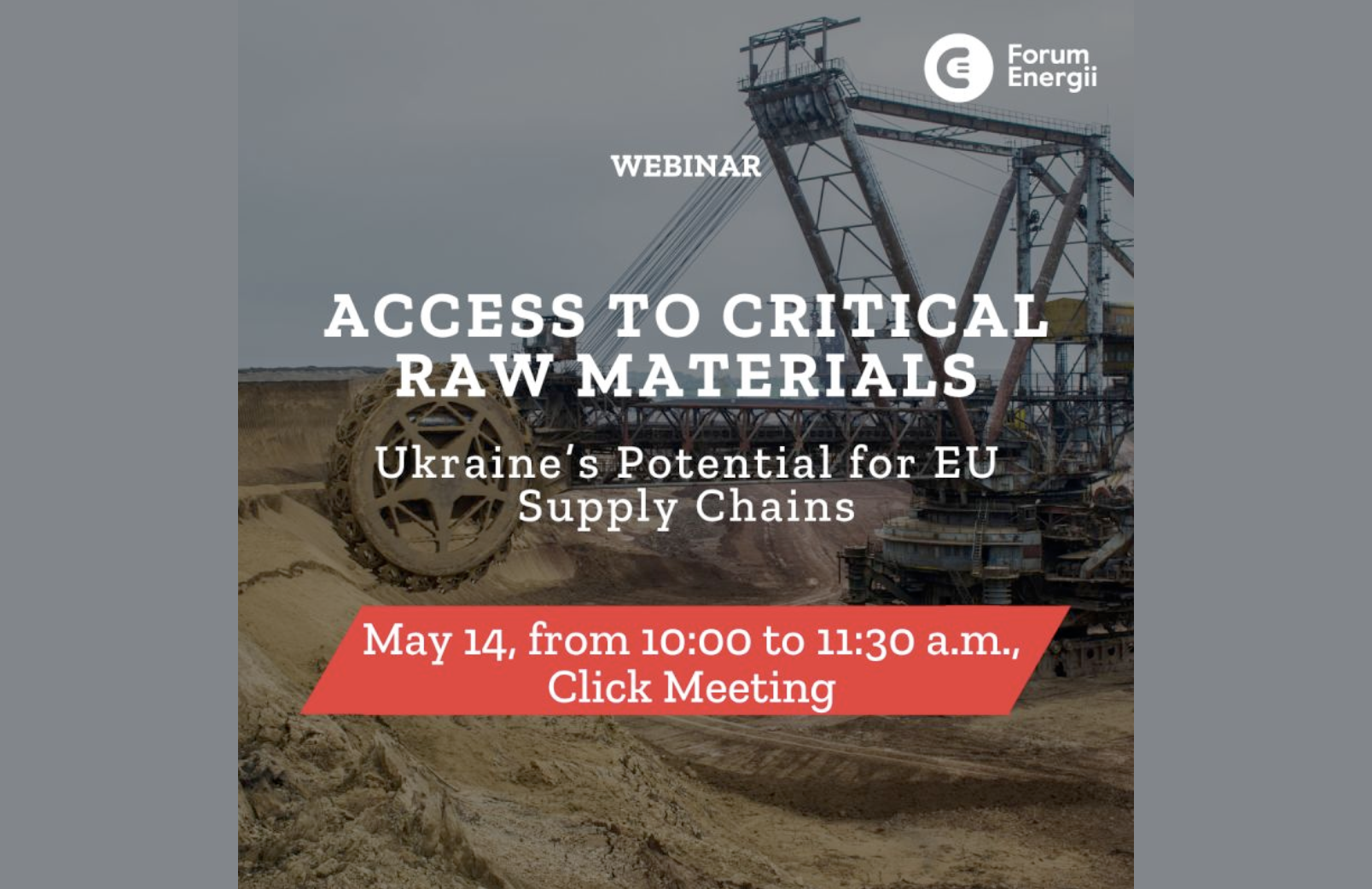
Access to Critical Raw Materials. Ukraine’s Potential for EU Supply Chains
Secure and stable access to critical raw materials (CRMs) is essential for the EU’s clean energy transition and strategic autonomy. While Ukraine has geological potential in selected CRMs, how do we turn it into credible cooperation under current wartime constraints? Join for a deep dive into the findings of Forum Energii’s newest report.
Ukraine's Electricity Integration Package: From adoption to implementation
Ukraine has taken an important step toward deeper integration with the EU electricity market through the recent adoption of the Electricity Integration Package. But legal adoption is only the beginning. This KECLab Policy Dialogue will bring together Ukrainian and European stakeholders to discuss what the EIP changes in practice, where the key implementation risks remain, and how Ukraine can move closer to the EU internal electricity market.

Ukrainian cities and communities development: principles, values and design
This event is a part of a series of informal meetings “Circle of Reconstruction” by ReThink. This is a space for conversations about a new quality of Ukraine’s reconstruction, shaped by environmental sustainability, resource efficiency, inclusivity, and a stronger focus on design and the quality of the built environment.
Energy market liberalisation plans: How much will we pay for electricity and gas after the war?
How are Ukraine’s economic reforms moving forward and how much will Ukrainians pay for electricity and gas after the war? Join expert discussion during the presentation of the April monitoring report on the implementation of the conditions of the IMF program and EU assistance under the Ukraine Facility by the RRR4U consortium.
Agriculture: EU Integration, Sustainability and Food Security
This second webinar in the joint series by the German Platform for the Reconstruction of Ukraine and the Build Ukraine Back Better Platform will explore priorities for transforming agriculture in Ukraine: from soil and water conservation to agroecological practices, sustainable livestock farming, and the development of small‑scale producers and local processing.
Growing rural resilience through women-led pasture and livestock management
Organised by the Centre for Environmental Initiatives “Ecoaction”, the Rural Women’s Business Network, and the Swedish Society for Nature Conservation, the roundtable focuses on current challenges in pasture and livestock management in Ukraine, with an emphasis on women farmers’ perspectives. The discussion aims to explore barriers and opportunities for advancing women’s access to resources, and promoting sustainable rural development through targeted discussions and dialogue.
Distributed energy systems and the role of state support in Ukraine
The development of maneuvering capacities has become one of the key areas for the recovery and enhancement of the Ukrainian energy system's resilience. Implementing this task requires attracting a significant volume of private investment into projects for new renewable energy capacities, energy storage systems, and flexible gas generation. Join a moderated online discussion by LibMod and European-Ukrainian Energy Agency dedicated to the role of state support in the development of maneuvering capacities in Ukraine.
Ukraine Nature Network: Navigating polycrisis together: Sustainable toolkit for land, forests, energy, and circular waste
Bringing together researchers, practitioners, and institutions from different regions, the sessions organised by the Ukraine Nature Network and partners will explore how science, policy, and international cooperation can support environmental protection and recovery in conflict-affected settings. Speakers and participants will explore practical toolkits and strategies for strengthening resilience, supporting nature restoration, and enabling sustainable reconstruction pathways in Ukraine and beyond.
One market, diverging interests? Ukraine’s EU integration and Polish agricultural production and processing
Ukraine's potential accession to the European Union may become one of the defining factors shaping the future of the Polish economy — most notably in agriculture and food processing, where Polish and Ukrainian interests may converge and compete. The discussion by Institute for Economic Research and Policy Consulting (IER) and Warsaw Enterprise Institute (WEI) will focus on the opportunities and risks associated with Ukraine's European integration, including its impact on the agri-food sector and trade, as well as the conditions under which EU enlargement could serve as a driver of growth rather than a source of imbalance.
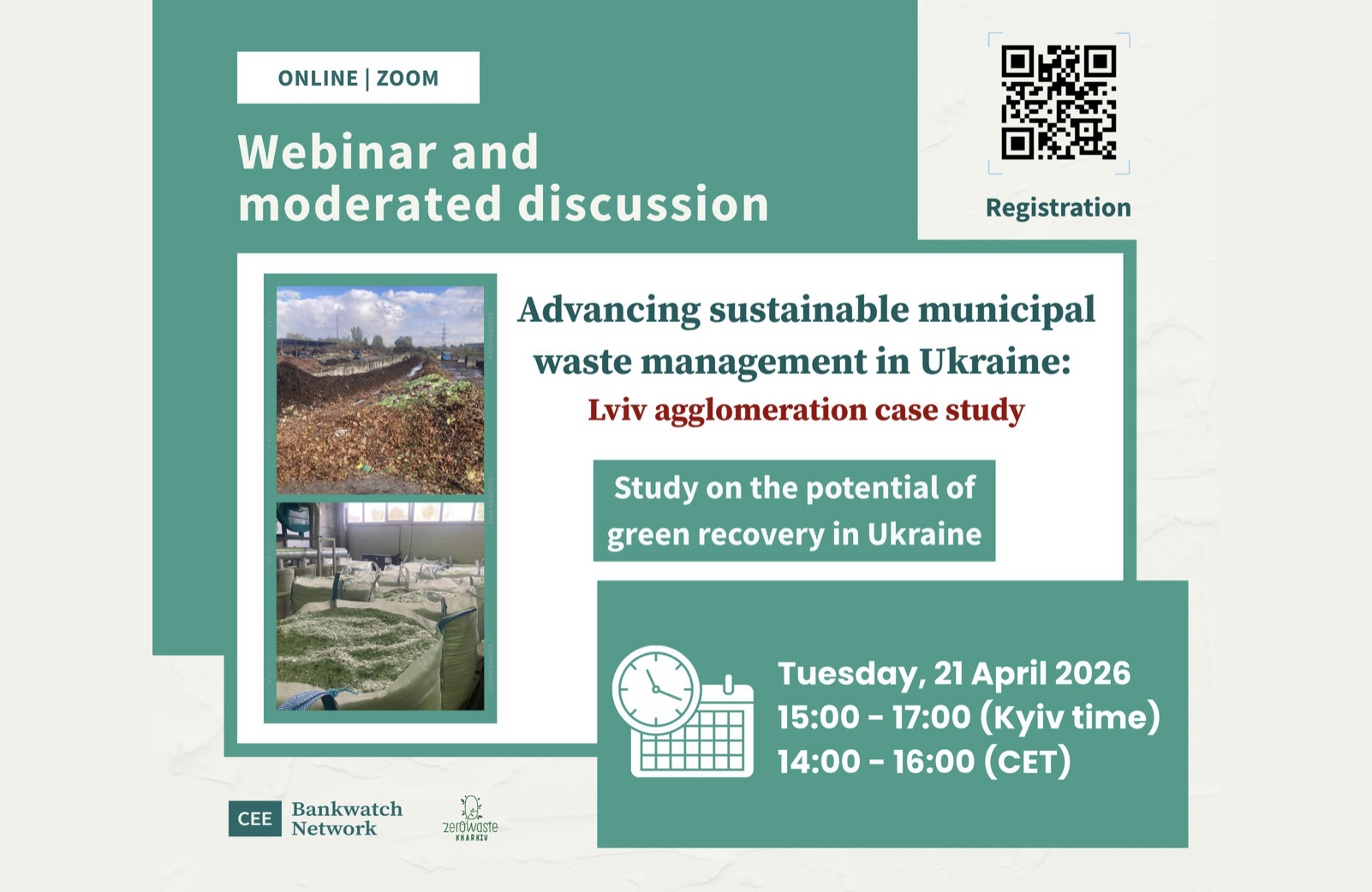
Advancing sustainable municipal waste management in Ukraine: Lviv agglomeration
The webinar organised by CEE Bankwatch Network will focus on Ukraine’s ongoing waste management reform in the context of EU integration. Using the Lviv agglomeration as a case study, the event explores the challenges of outdated disposal practices and highlights opportunities for improved planning, inter-municipal cooperation, and alignment with EU standards. The discussion builds on findings from a recent research paper and brings together civil society and local stakeholders to consider practical next steps for reform at local, regional, and national levels.
Ukraine misses partners’ benchmarks: What happens to the funding?
The Ukrainian economy remains highly dependent on steady external financing. This stability is now under pressure due to the ongoing parliamentary crisis, which is complicating the passage of legislation under the “money in exchange for reforms” framework. At the same time, the government has been hesitant to commit to some politically sensitive reforms. How large is the current shortfall in the state budget? And could the EU’s €90 billion loan be put at risk if Ukraine fails to meet all IMF conditions? Join the event by RRR4U consortium of Ukrainian civil society organisations to find out.
Ukraine’s Path to the EU: Engaging European "Green" Audiences
In many EU countries, the level of awareness about Ukraine, its reforms, and the actual progress of negotiations remains limited. Public debate is often shaped by domestic political perspectives, economic concerns, or migration narratives. How can Ukrainian stakeholders effectively engage with European audiences to build support for Ukraine’s membership? Which formats of cooperation work best? Join the event by Resource and Analysis Center “Society and Environment” to find out.
Pieces of Resilience: Co-Creating Capacity, Security, and Transformation
FZO Round 2026 is an international, interdisciplinary workshop dedicated to advancing cutting-edge research on resilience at the intersection of environment, climate, security, and governance. This edition places particular emphasis on post-war recovery and resilience-building, with a strong focus on Ukraine and other conflict- and crisis-affected contexts, as well as transregional perspectives. The event is organised by the University of Greifswald and IKEM.
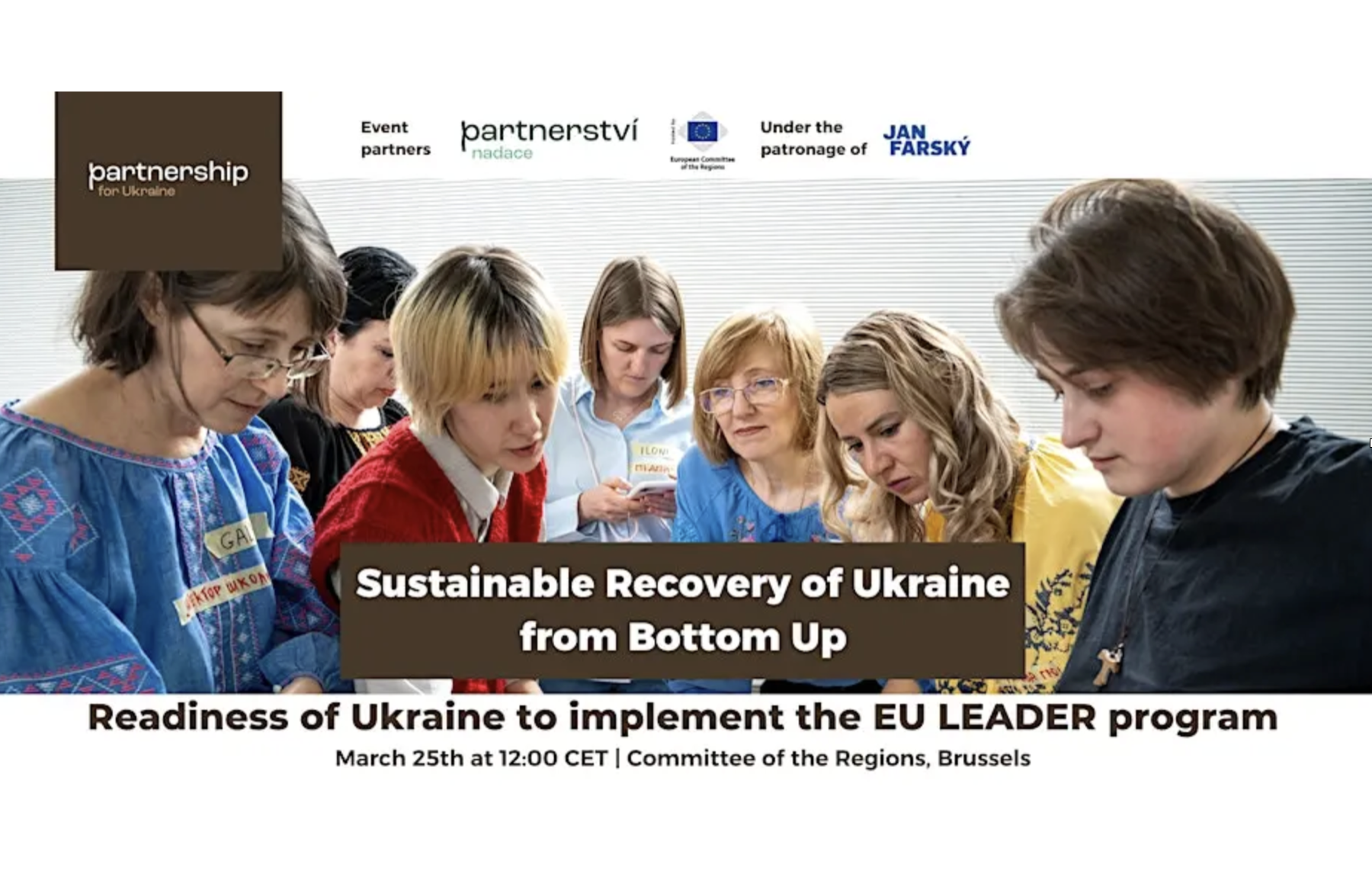
Sustainable Recovery of Ukraine from Bottom Up
The event by Environmental Partnership Foundation will explore how EU recovery instruments could better support community-led approaches, pilot the LEADER methodology in Ukraine, and enable recovery funding to reach municipalities and local partnerships directly.