Search by key words or by sector (energy, climate, buildings, agriculture, industry, environment, finance, EU accession etc)
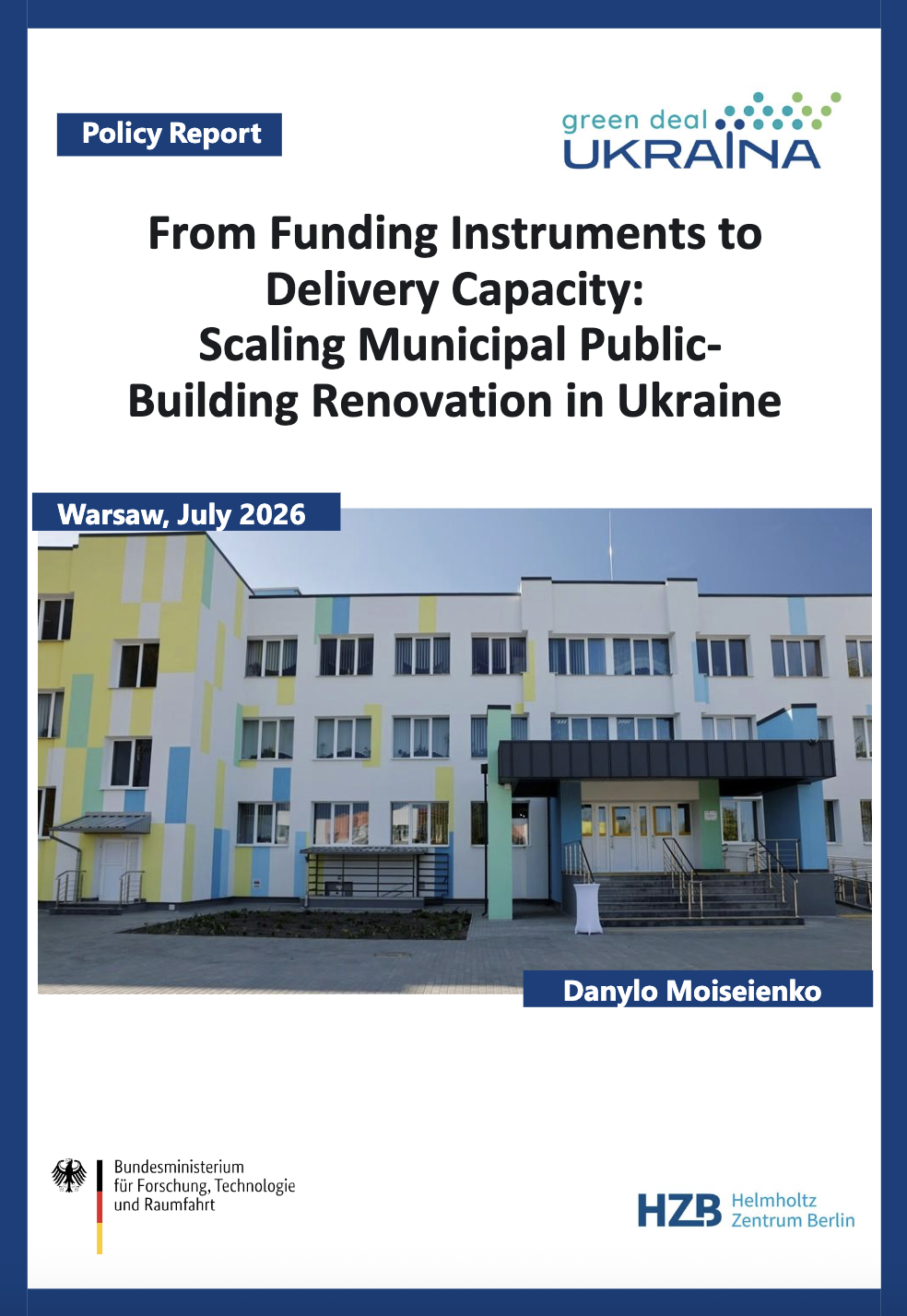
From Funding Instruments to Delivery Capacity: Scaling Municipal Public Building Renovation in Ukraine
The report explores how Ukraine can scale energy-efficient renovation of municipal public buildings by addressing both funding gaps and municipal delivery capacity.
Ukraine Facility and the Future Support Model for Ukraine after 2027: Civil Society Position
This paper assesses the role of the Ukraine Facility and Ukraine Plan as key frameworks for Ukraine's reforms, recovery and European integration, while outlining a vision for the future European support model after 2027.
Decarbonisation Fund for Ukraine’s Reconstruction, Accession and Transformation
The policy brief proposes an EU–Ukraine Decarbonisation Fund that matches international financing with domestic carbon revenues to support green reconstruction, industrial modernisation, and EU accession.
Shadow report "Ukraine’s reconstruction architecture"
This diagnostic report provides an independent civil-society assessment of Ukraine’s reconstruction architecture amid the ongoing full-scale war.
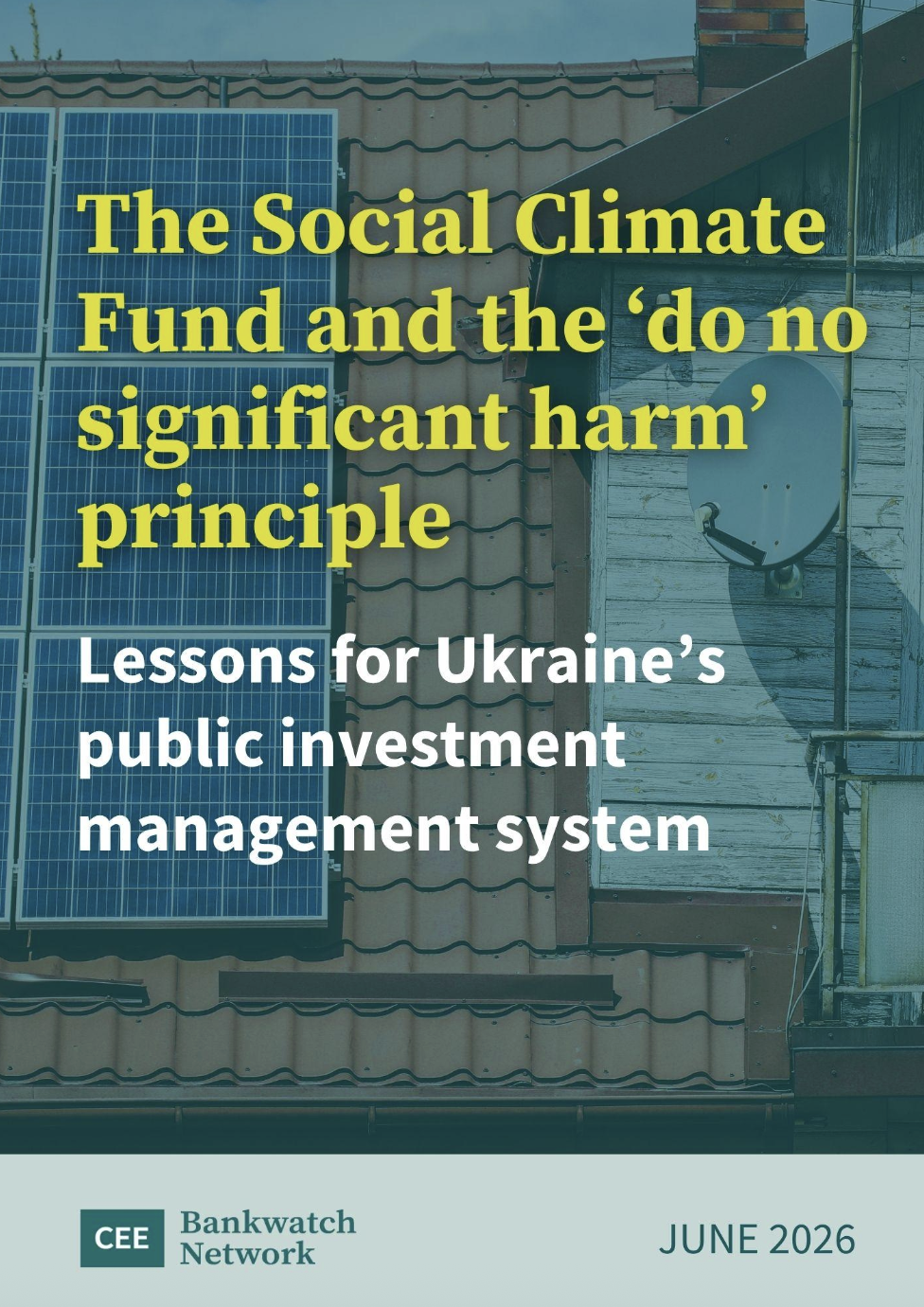
The Social Climate Fund and the ‘do no significant harm’ principle for Ukraine
This briefing examines how Ukraine can strengthen the environmental safeguards in its public investment system by learning from the EU’s Social Climate Fund.
White Book: How Environmental Impact Assessments Work in Ukraine and What Needs to Change
The report analyses the current state of EIA implementation in Ukraine, identifies systemic gaps, and gives recommendations for improving EIA policies and practices in line with European standards.
Ukraine’s Reconstruction Architecture: Evolving Approaches and Key Challenges
This policy brief summarises a study of Ukraine’s reconstruction processes in 2025–early 2026, analysing key mechanisms, green recovery integration, and major systemic challenges shaping recovery policy.
Embodied Carbon. A Material Compass for EU-oriented Reconstruction of War-Damaged Residential Buildings in Ukraine
The publication presents a whole-life carbon approach to reconstruction of Ukraine’s buildings, addressing not only operational energy efficiency but also emissions embedded in construction materials.

Ukraine’s EU Integration and the Future of Polish Transport
This report examines how Ukraine’s EU integration is reshaping Poland–Ukraine transport connectivity, highlighting the opportunities, challenges, and reforms needed to build a competitive, integrated cross-border transport and logistics system aligned with EU standards.