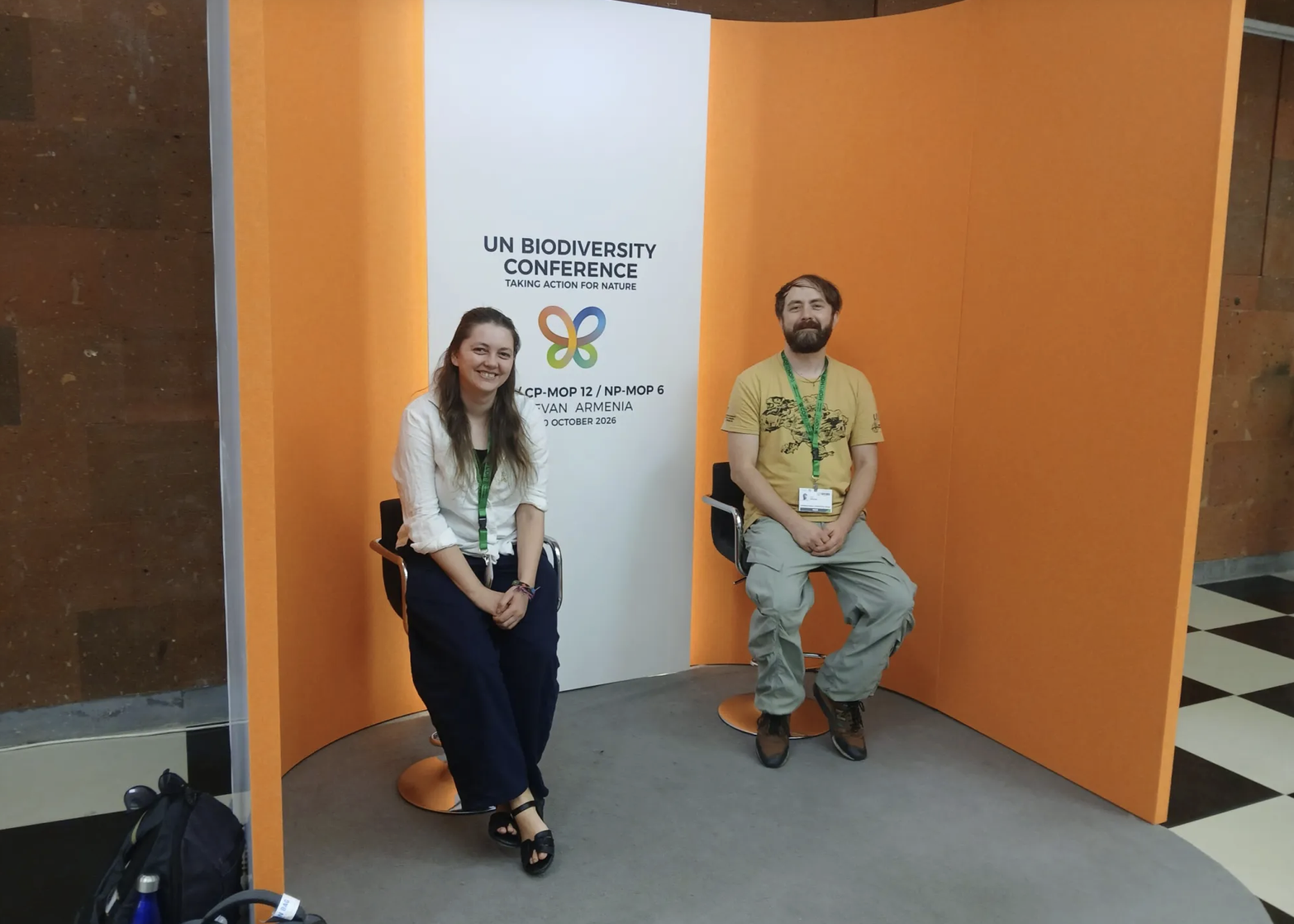
How Ukraine defends nature's interests at the international level: the experience from COP17 in Yerevan
Drawing on Ukrainian Nature Conservation Group's experience at the 2026 UN Biodiversity Conference (COP17), this article reflects on the role of international environmental negotiations in advancing Ukraine's environmental priorities during wartime. It discusses efforts to raise awareness of the environmental impacts of Russia's aggression, engage with international partners on biodiversity conservation and post-war recovery, and contribute to global discussions on nature protection and environmental governance.

Bridge Strategy of Ukraine. Five action points to save bridges and give them a chance of being rebuilt
Ukraine cannot afford to approach its growing bridge crisis one project at a time. Thousands of ageing and deteriorating bridges, combined with wartime attacks on critical crossings, require difficult choices about what to save, repair, replace or abandon. This article sets out five action points for a national bridge strategy: prioritise indispensable crossings, protect funding for maintenance and repairs, integrate Ukraine’s bridge sector with European standards and markets, optimise the existing network rather than simply expanding it, and develop major projects with international financing and expertise.

Promises or commitments? Fifty shades of green at the Ukraine Recovery Conference 2026
“Green recovery” has become mainstream language at the Ukraine Recovery Conference, but what does green actually mean in practice? Looking back at URC 2026 in Gdańsk, the authors explore stronger civil society and municipal engagement alongside an increasingly pragmatic, business-oriented recovery agenda, and argue that environmental safeguards, social concerns and sustainable solutions need a much stronger place in the debate.

Billions for reconstruction: how not to finance projects that harm the environment
As Ukraine directs billions of euros towards reconstruction, environmental safeguards will be crucial to ensuring that public investment does not create costly problems for the future. The article examines how the EU’s “Do No Significant Harm” principle is applied, where Ukraine’s current approach falls short, and what practical lessons from European experience could make environmental criteria a meaningful part of selecting reconstruction projects.

Closing mines according to European rules: how Ukraine can support its path towards EU membership
The article explores how Ukraine can align the closure of coal mines with EU rules as part of its European integration. It highlights the need for proper closure planning, long-term environmental monitoring, financial guarantees, and support for workers and mining communities. Drawing on European legislation and experience, it argues that a well-managed just transition can help communities develop new economic opportunities while bringing Ukraine closer to EU standards.

Reconstruction architecture: why Ukraine needs not only speed, but also a system
The RISE Ukraine Shadow Report assesses how Ukraine’s reconstruction architecture works in practice and identifies the systemic gaps that still need to be addressed. It highlights fragmented governance, uneven institutional and local capacity, coordination challenges, human capital needs and gaps in transparency, while calling for a more coherent approach to public investment and reconstruction. The report also stresses that the “build back better” principle should become a practical framework for achieving more sustainable, resilient and inclusive reconstruction. Its central message is clear: successful recovery depends on building an integrated, data-driven and accountable system, not simply rebuilding individual facilities.