Analysis of Solar Power Projects Implemented by NGO Ecoclub
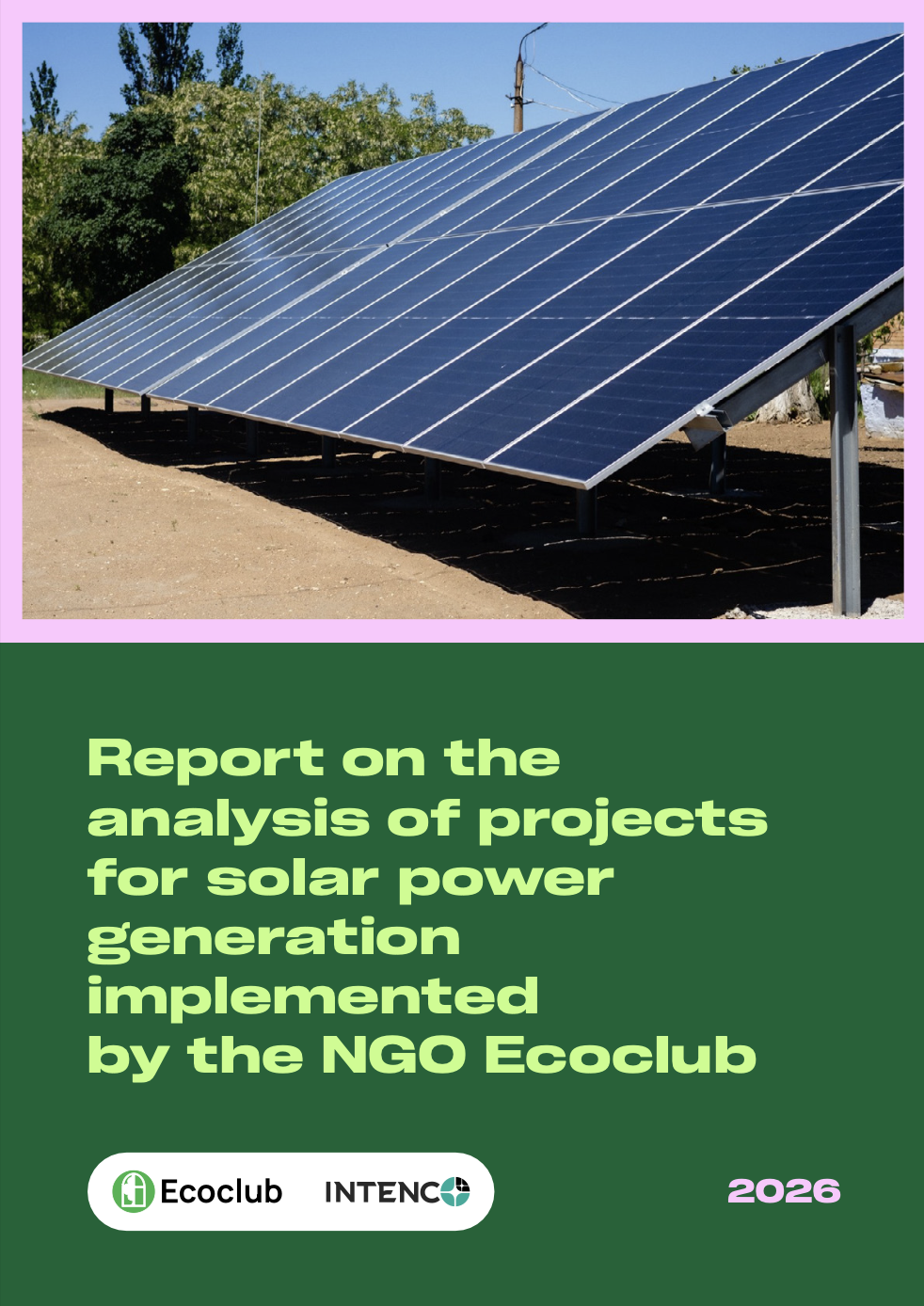
by NGO Ecoclub
The publication summarises an independent analysis of 86 solar power plants installed with NGO Ecoclub’s support at critical infrastructure and public facilities, including 55 healthcare institutions and 21 water and wastewater utilities. With 4.38 MW of solar capacity and 2,560 kWh of battery storage, the projects have strengthened energy resilience, reduced reliance on diesel generators, and demonstrated their ability to maintain essential services during prolonged power outages. By February 2026, plants connected to the ASEM PV monitoring system had generated 3.63 million kWh of electricity, helping avoid an estimated 1,130 tonnes of CO₂ emissions.
The analysis also identifies opportunities to improve the performance of existing and future projects. In particular, some facilities generate more solar electricity during sunny periods than they can immediately use, creating scope for better energy storage and optimisation of battery charging, discharging and consumption schedules. These findings could be incorporated into future solar projects, using real operational data to refine technical solutions and maximise the efficiency and resilience of renewable energy systems at critical facilities.