Kyiv
November 26, 2026
Ukraine’s environmental civil society sector faces a dual challenge: dealing with the impacts of the full-scale war while working on long-term environmental protection and climate adaptation. Which organizations make up the sector? How do they work? What helps them achieve results, and what hinders their development?
These questions guided the study Ukraine’s Environmental Civil Society Sector: Development, Capacity and Barriers, conducted jointly by WWF-Ukraine and the research company Operatyvna Sotsiolohiia (Operso).
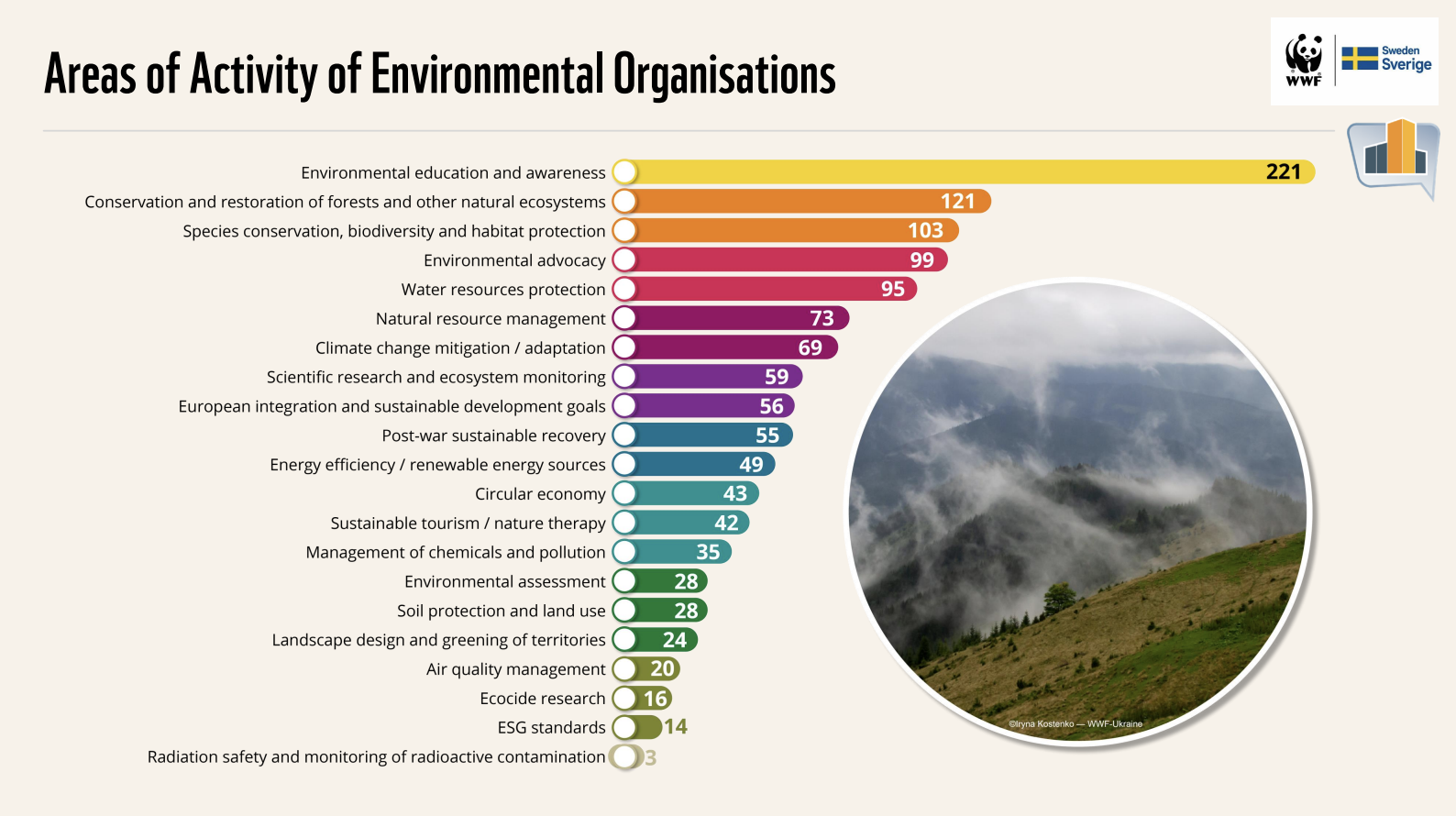
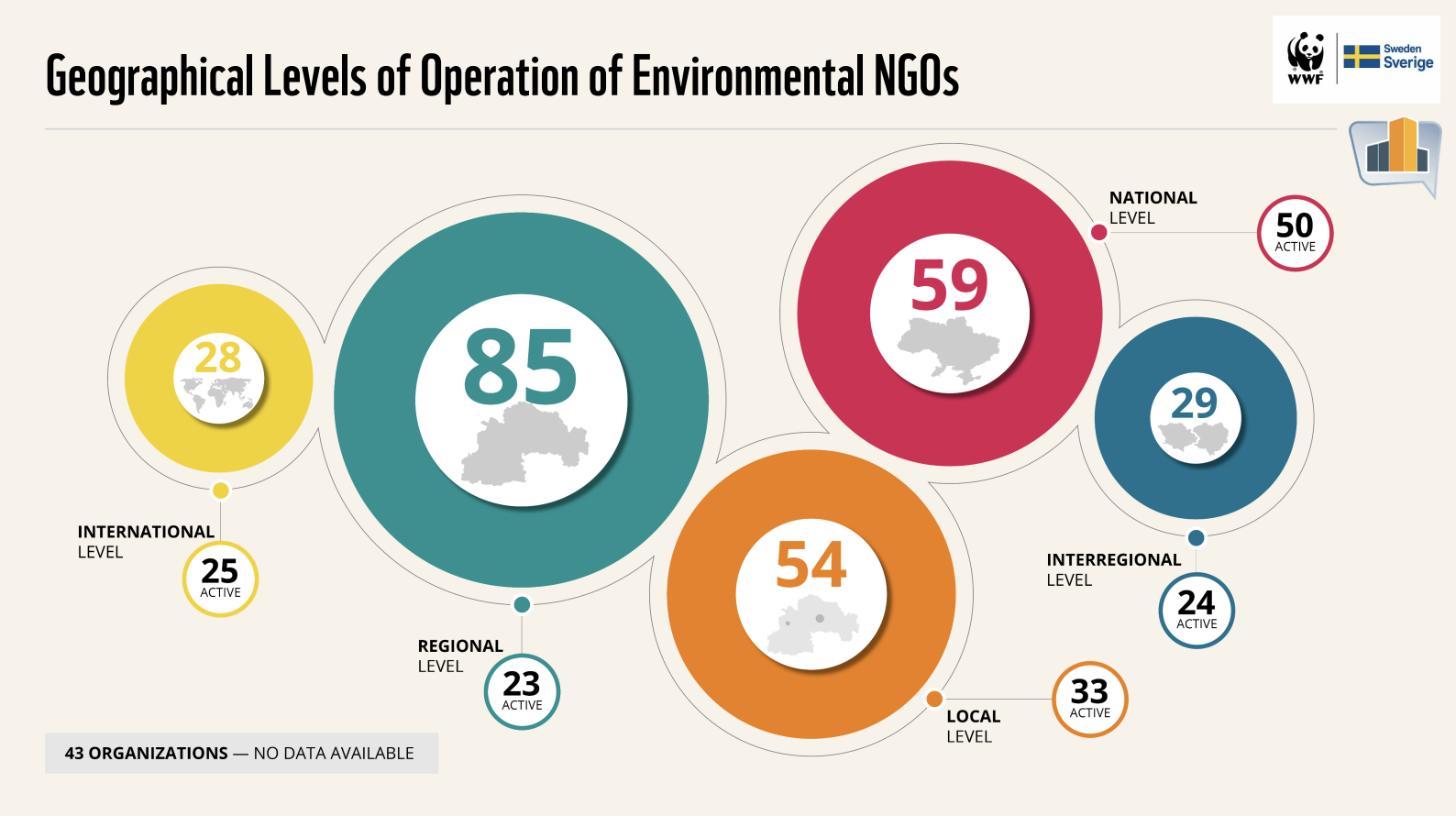
We wanted to build a clear picture of the sector: its geographic reach, areas of work, resources, and needs. We examined how organizations are managed and funded, how they engage in advocacy and communications, and how they cooperate with government authorities, donors, and other partners.
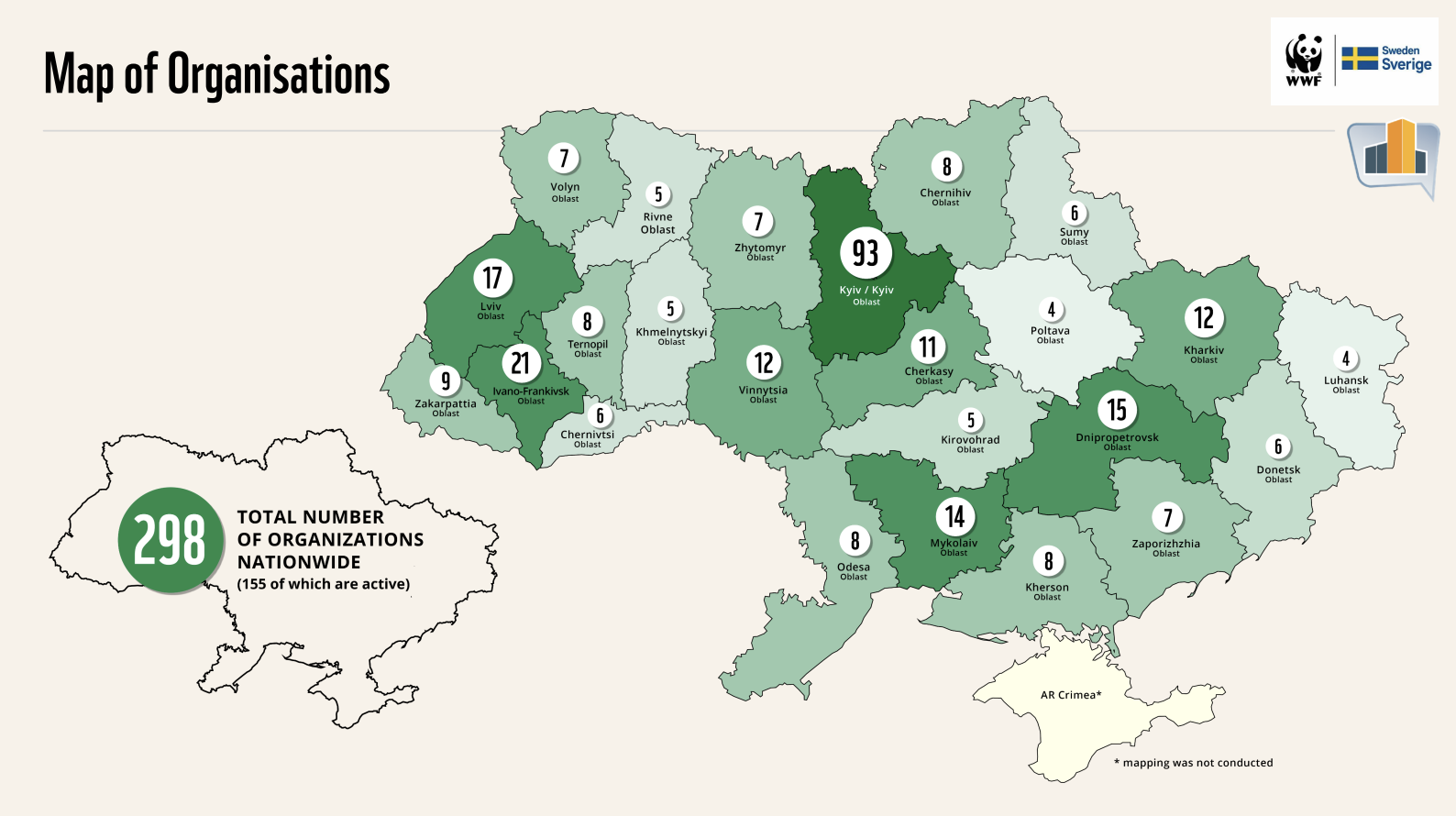
The study results serve as a roadmap, showing which organizations operate in specific regions, what issues they work on, and how they can contribute.
The findings can help the following groups:
Environmental civil society organisations can better understand their place in the sector, identify shared challenges, find potential partners and coalitions, and plan their organisational development. The findings can also provide evidence to support fundraising efforts.
Civil society organisations in other sectors, including humanitarian organizations, can find experts to help them take environmental risks into account when planning recovery projects. This expertise can support work on water supply, waste management, housing reconstruction, and the restoration of livelihoods. The study can also help identify opportunities for joint advocacy on public participation in reconstruction decisions, transparent use of natural resources, and protection of the right to a healthy environment.
Donors and international organisations can find potential partners based on their areas of work and location and design support programs that take into account the sector’s capacities and limitations, as well as their own objectives.
Government authorities can identify organizations with relevant experience to involve in policymaking and consultations, draw on regional expertise, and improve mechanisms for cooperation with civil society.
Local authorities can find potential partners to address environmental challenges, develop local programs and recovery projects, and engage with communities.
Businesses and sustainability professionals can find potential partners for environmental projects and community engagement, access specialized expertise, and plan collaboration with civil society organizations. Demand for this expertise is growing as environmental requirements become increasingly important in Ukraine’s EU accession process and in access to international funding.
Educational and research institutions can gain a better understanding of the skills needed in the environmental sector. They can use this knowledge to update curricula and train professionals for the green transition. The study identified demand for stronger skills in fundraising, advocacy, data analysis, and research, as well as a need for specialists in specific areas of the natural sciences.
Media organisations can gain a better understanding of the environmental sector’s areas of work. They can find data, experts, and case studies for stories about green recovery, the environmental impacts of war, EU integration, climate adaptation, and nature conservation.
"Ukraine’s EU integration, post-war reconstruction, and the achievement of sustainable development goals all require environmental expertise. Civil society organizations therefore need to work systematically, build partnerships, strengthen their expertise, and be visible at the national level. This is the focus of the Together for People and Planet program*, through which WWF-Ukraine works to strengthen the capacity of Ukraine’s environmental sector. Environmental protection is a complex undertaking that affects our safety, health, quality of life, and the country’s long-term sustainability," says Olena Alchanova, Program Coordinator.
We are already using the findings in our work. For example, we have organised two fundraising webinars based on the needs identified by environmental organisations. The findings also inform our work on in-person events and discussions that bring together environmental organisations and other stakeholders, particularly humanitarian actors, around Ukraine’s recovery and reconstruction.
What the study found
Ukraine’s environmental sector has significant potential in terms of its people, expertise, and advocacy capacity. Organizations work to protect biodiversity and conserve and restore natural ecosystems. Their work has contributed to the creation and expansion of protected areas, the development of environmental monitoring systems, the preparation of recommendations for legislative and regulatory changes, and the integration of sustainable development principles and the green agenda into national and local policies.
At the same time, several systemic challenges continue to limit the sector’s development.
More than half of the organizations surveyed (54.4%) experience financial instability. They often do not know when their next funding will arrive, how long it will last, or how much they will receive. This makes long-term planning difficult, affects staff retention, and makes it harder to sustain work that needs to continue beyond individual projects.
Other key barriers include:
Staff shortages and overworked teams. Organisations face staffing gaps because some employees have joined Ukraine’s defence forces or relocated. They also face difficulties attracting volunteers and dealing with staff burnout. Unstable funding makes it harder to retain specialists between projects, while smaller teams have less capacity to secure new resources.
Lack of sustained coordination. Despite active cooperation across the sector, organizations need more regular opportunities to exchange information and experience, support for joint initiatives, and effective mechanisms for coordinating their work.
Limited influence on decision-making and challenges in building partnerships. These challenges stem from factors such as some authorities’ limited willingness to engage in meaningful dialogue, consultation processes that are sometimes treated as formalities, and the low priority often given to environmental issues. Organizations also need stronger cooperation with donors and international partners.
Despite these challenges, 89.5% of respondents expect to maintain or expand their work over the next two years. Many organisations see keeping their teams together and continuing their activities as major achievements. However, being able to adapt does not always mean an organization is sustainable in the long term. Many continue operating with overstretched staff, relying on volunteer work and constant efforts to secure funding.
Sector development outlook
In the coming years, Ukraine’s recovery and EU integration will be two of the main factors shaping the environmental civil society sector.
These processes may expand the role of civil society organisations, moving them from addressing individual environmental issues toward playing a bigger role in shaping policies, programs, and decisions related to recovery and reconstruction.
Demand for specialised expertise is also likely to grow, particularly in areas such as environmental law, data analysis, policy monitoring, environmental impact assessment, and the implementation of EU environmental legislation and standards.
The role of local organisations is also expected to grow in importance. Many recovery-related decisions will be made or implemented at the community level, and local organizations can play a key role because they understand local needs, priorities, and challenges.
About the study
The study was conducted between June and September 2026. The research team reviewed previous studies and publicly available sources and compiled a database covering 298 environmental organizations. Representatives of 57 organizations participated in a telephone survey. To better understand their experiences, the team also conducted eight expert interviews and one focus group discussion involving representatives of ten organisations.
"This is one of the few comprehensive studies of Ukraine’s environmental sector in recent years. There is no single source of information on the number of organizations working in the sector or their areas of focus, so finding and mapping them required significant research. We do not claim that the database is exhaustive. Some smaller organizations and initiatives with limited public visibility may not have been captured. Nevertheless, the data provide a valuable picture of the sector’s structure, capacities, and the interconnected challenges organizations face," explains Olena Alchanova, Program Coordinator.